
Ever feel like your back is carrying the weight of your entire life?
Literally, it is.
Your back isn’t just a support system. It’s a complex network of muscles, bones, and nerves that help you sit, stand, twist, lift, and even breathe. But when those muscles get tight, weak, or overworked—thanks to long hours of sitting, stress, or poor posture—discomfort slowly creeps in.
According to the World Health Organization, lower back pain is the single leading cause of disability worldwide. Today, most of us spend hours hunched over laptops or slouched on couches—often without even realizing it. Over time, tension builds up, leaving our backs sore, stiff, and uncomfortable.
The good news? You don’t need a fancy gym or a physical therapy appointment to start feeling better. Just a few minutes of gentle, targeted back exercises at home can make a world of difference.
But before we get into that, let’s understand the basics.
Understanding Your Back Muscles
Your back is made up of several key muscle groups that work together to support movement and maintain posture:
- Latissimus Dorsi (Lats): The large muscles on the sides of your back—help with pulling movements.
- Erector Spinae: Run along your spine—essential for posture and spinal stability.
- Rhomboids & Trapezius: Between your shoulder blades—help with pulling your shoulders back and supporting the upper back.
- Quadratus Lumborum (QL): Deep in the lower back—supports spinal alignment and hip movement.
- Multifidus: Small but mighty muscles that stabilize the spine segment by segment.
When these muscles are weak or tight, you’re more likely to experience pain, stiffness, or injury.
Warm-Up: Get Your Back Ready to Move
Warming up is crucial. It increases blood flow to your muscles, improves flexibility, and prevents strain. Here are a few gentle warm-up exercises (3–5 minutes) to prep your back:
1. Arm Circles
- Why: Loosens up the shoulder joints and upper back.
- How to do it:
Stand tall, stretch your arms out to the sides.
Make small circles, gradually increasing the size.
Do 10–15 in each direction.
2. Marching in Place
- Why: Elevates heart rate and activates core & lower back.
- How to do it:
Stand and march gently, lifting knees to hip height.
Pump your arms for extra activation.
Continue for 30–60 seconds.
3. Torso Twists
- Why: Improves spinal mobility and warms up your core and back.
- How to do it:
Stand with feet hip-width apart.
Gently twist your torso side to side, letting your arms swing naturally.
Continue for 30 seconds.
10 Gentle Back Exercises You Can Do at Home
Let’s break down each move with:
- Why this exercise matters
- Targeted muscles
- Step-by-step instructions
1. Cat-Cow Stretch
Why: This yoga movement increases spine flexibility, relieves stiffness, and improves posture.
According to a 2017 study published in the Journal of Physical Therapy Science, Cat-Cow poses help reduce spinal stiffness and improve body awareness in adults with chronic pain.
Target Muscles: Erector spinae, spinal stabilizers
How to do it:
- Get on all fours (hands under shoulders, knees under hips).
- Inhale: arch your back, lift your head and tailbone (Cow).
- Exhale: round your spine, tuck your chin and tailbone (Cat).
- Repeat for 8–10 rounds.
2. Child’s Pose
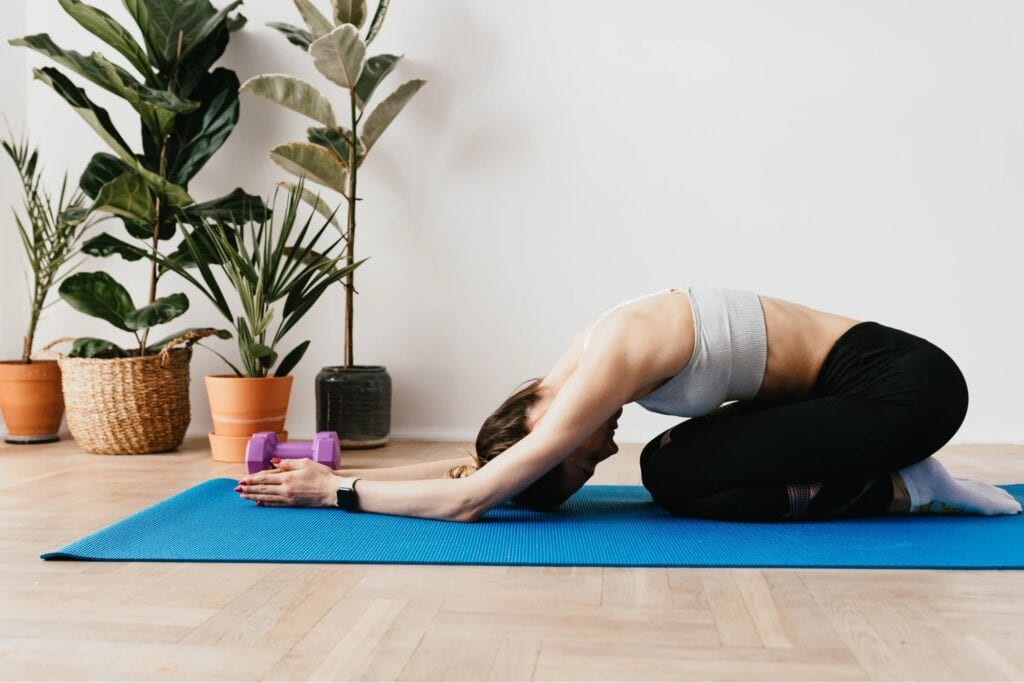
Why: A calming pose that stretches the lower back and hips.
Target Muscles: Erector spinae, latissimus dorsi
How to do it:
- Kneel on the floor, sit your hips back toward your heels.
- Reach arms forward, forehead to the floor.
- Breathe deeply and hold for 30–60 seconds.
3. Pelvic Tilts
Why: Builds control of lower back and engages core stability.
A study in the journal Spine (2014) found pelvic tilt exercises effective in managing nonspecific low back pain.
Target Muscles: Abdominals, lower erector spinae
How to do it:
- Lie on your back with knees bent and feet flat.
- Flatten your back against the floor by tilting your pelvis upward.
- Hold for 3 seconds, then return to neutral.
- Repeat 10–15 times.
4. Knee-to-Chest Stretch
Why: Relieves tightness in the lower back and hips.
Target Muscles: Glutes, lower back, hip flexors
How to do it:
- Lie flat, bend one knee and pull it gently toward your chest.
- Hold behind your thigh or shin.
- Hold 20–30 seconds, switch legs.
- Do 2–3 rounds per leg.
5. Seated Forward Bend
Why: Stretches the entire posterior chain (back of body).
Target Muscles: Hamstrings, erector spinae
How to do it:
- Sit on the floor with legs straight.
- Hinge forward from your hips, reaching for your toes.
- Keep spine long—don’t hunch.
- Hold for 30–45 seconds.
6. Bridge Pose

Why: Strengthens glutes, core, and supports the lower back.
Harvard Health notes that bridges are excellent for building core and glute strength, which directly supports back health.
Target Muscles: Glutes, hamstrings, erector spinae
How to do it:
- Lie on your back, knees bent, feet hip-width apart.
- Push through your heels to lift your hips.
- Squeeze your glutes at the top, hold for 3 seconds.
- Lower slowly. Do 10–15 reps.
7. Wall Angels
Why: Corrects posture and opens up tight upper back and shoulders.
Target Muscles: Rhomboids, traps, rear delts
How to do it:
- Stand with your back flat against a wall.
- Bring your arms up in a “W” shape against the wall.
- Slowly raise and lower your arms, keeping contact with the wall.
- Repeat for 10–12 reps.
8. Thread the Needle
Why: Enhances thoracic spine mobility and reduces tension in shoulders.
Target Muscles: Rhomboids, traps, upper back
How to do it:
- Start on all fours.
- Slide your right arm under your left, reaching across.
- Let your right shoulder and head rest on the floor.
- Hold for 30 seconds, then switch sides.
9. Supine Twist
Why: Gently decompresses the spine and improves rotational mobility.
Target Muscles: Obliques, erector spinae, lower back
How to do it:
- Lie on your back, arms out in a T.
- Bring one knee across your body.
- Look in the opposite direction.
- Hold for 30 seconds each side.
10. Standing Forward Fold
Why: Reduces tension in the back and hamstrings, decompresses spine.
Target Muscles: Erector spinae, glutes, hamstrings
How to do it:
- Stand tall, then fold forward from the hips.
- Let your arms and head hang down.
- Slight bend in knees is okay.
- Hold 30–60 seconds.
Build a Daily Routine
Create a 10–15 minute routine by picking 4–6 of these exercises daily.
Aim for 3–5 sessions per week. Combine with light walking for even better results.
Fun Fact: Studies from The Lancet and JAMA found that consistent movement and stretching reduce chronic back pain more effectively than medication or bed rest.
Ready to Make Things a Bit Stronger?
Once you’re comfortable with these gentle back exercises, you might want to take the next step by adding a little resistance. Resistance bands are a great option—they’re light, easy to use, and perfect for beginners.
Want to try them out? Take a look at this helpful post:
10 Easy Resistance Band Exercises for Beginners — it’s a simple way to build strength at home without heavy equipment.
When to See a Professional
These exercises are safe for most people with mild to moderate back discomfort. But if you experience:
- Persistent or sharp pain
- Numbness, tingling, or leg weakness
- Loss of bladder or bowel control
…see a healthcare professional or physical therapist. You might be dealing with something more serious like a herniated disc or nerve impingement.
Frequently Asked Questions About Back Health:
Q1. What causes lower back pain?
A: Lower back pain is commonly caused by a combination of poor posture, weak core muscles, prolonged sitting, lack of movement, and muscle imbalances. Injuries, improper lifting techniques, and underlying conditions like herniated discs, sciatica, or osteoarthritis can also contribute to chronic discomfort.
Q2. Are back exercises safe if I have an injury or chronic pain?
A: In most cases, gentle back exercises are safe and even beneficial. However, if you have a diagnosed condition—such as a herniated disc, spinal stenosis, or severe sciatica—it’s important to consult a doctor or physical therapist before starting. They can guide you toward movements that support healing rather than worsen the issue.
Q3. How often should I do back exercises?
A: For general wellness and back pain prevention, doing back exercises 3 to 5 times a week is ideal. Simple stretches and mobility exercises, like cat-cow or child’s pose, can be safely done daily to reduce stiffness and improve flexibility.
Q4. Can back exercises improve my posture?
A: Yes, they can. Strengthening the back, core, and glute muscles helps stabilize your spine and counteracts the negative effects of sitting or slouching. Over time, consistent back-focused exercises can significantly improve your posture, reduce fatigue, and make sitting or standing feel more natural.
Q5. When should I see a doctor about back pain?
Q5. When should I see a doctor about back pain?
A: You should see a doctor if your back pain:
1. Lasts longer than a few weeks
2. Is severe or getting worse
3. Comes with numbness, tingling, or weakness in your legs
4. Affects your ability to walk or sleep
5. Is accompanied by loss of bladder or bowel control
These symptoms could indicate a more serious problem that requires medical attention.
Give Your Back the Love It Deserves
Your back works 24/7 to support you—literally. Taking 10–15 minutes a day to stretch and strengthen it is one of the best investments you can make in your health. With these gentle, targeted back exercises, you can relieve pain, improve posture, and feel more at ease in your body—all from the comfort of home.
And if you’re looking to take care of more than just your back, be sure to check out Your Ultimate Daily Self-Care Guide for simple everyday habits that support your whole body and mind.
Start slow, stay consistent, and feel the difference.
Latest Post:
- Chest Workouts for Women: Strengthen, Tone, and Enhance Confidence
 While glutes, abs, and thighs often dominate women’s fitness conversations, chest workouts remains underrated. A …
 - How to Do Squats Correctly – Beginners GuideMaster the Basics: Learn How to Squat Safely and Effectively—Even If You’ve Never Done One …
- 10 Gentle Back Exercises – Relieve Pain and Build StrengthEver feel like your back is carrying the weight of your entire life? Literally, it …
- Ultimate Glute Training for Women: Lift, Tone & StrengthenGlute training is essential for women who want to build strength, improve posture, and shape …
- Belly Fat in Women: Causes, Risks, and Best SolutionsWhy Belly Fat is Hard to Lose—And What You Can Do About It Struggling to …
- Get Rid of Underarm Fat Naturally: Best Exercises & Proven Tips
 Underarm fat—aka “bat wings”—can be stubborn, but getting rid of it doesn’t have to be complicated. The …